
Kaysville Car Care Guide · 8 min read
Winter Road Salt Car Care in Kaysville: Protect Your Paint
From November through March, UDOT treats I-15, US-89 and local roads with salt brine and magnesium chloride. That keeps drivers safe, but it is corrosive to paint, chrome, brake components and undercarriages.
What road salt does to a vehicle
Salt brine is applied before storms to prevent ice bonding. Magnesium chloride and volcanic cinders are added during and after. All of these collect on wheel wells, rocker panels, undercarriages and lower body panels. Left for weeks, salt accelerates corrosion on bare metal, attacks clear coat, stains chrome and pits alloy wheels.
Mag chloride is especially sticky. It bonds to paint and attracts moisture from the air, so it stays wet and corrosive even on dry days. A quick rinse at a touchless wash helps, but it rarely reaches the undercarriage or cleans door jambs and wheel arches thoroughly.
Before winter: get protected in October
The best winter prep happens before the first storm. A protected surface sheds salt instead of absorbing it.
- Apply a fresh sealant or ceramic coating so salt brine beads and rinses off.
- Clean and seal wheel faces and inner barrels where brake dust and salt mix.
- Treat rubber door seals with a conditioner so they do not freeze shut.
- Apply a rust inhibitor to exposed undercarriage components if they show any bare metal.
- Make sure floor mats are rubber or all-weather, not carpet that holds salt.
During winter: wash more often, wash smarter
In salt season, a two-week wash schedule is the minimum. If you drive I-15 or US-89 daily, weekly is better.
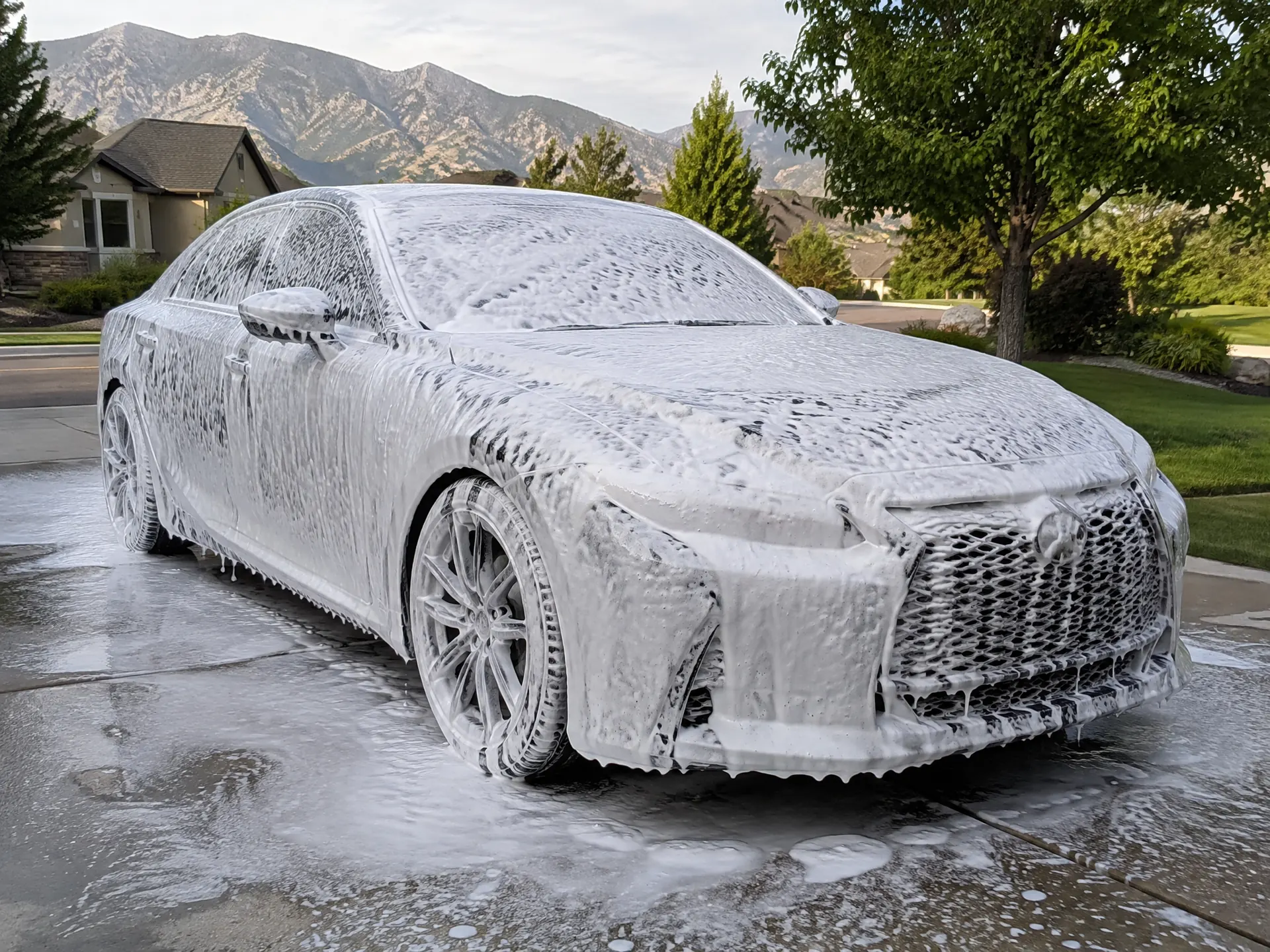
Never dry wipe salt grime. Dried salt is abrasive, and dragging it across the paint adds swirl marks. Start with a thorough rinse or foam pre-soak, then hand wash with plenty of lubrication.
Pay attention to the wheel wells, rocker panels and undercarriage. Salt and cinders pack into these areas and hold moisture against metal. Our mobile detail includes a dedicated undercarriage rinse during winter months.
Inversion season: dust on top of salt
January and February often bring temperature inversions that trap particulates along the Wasatch Front. Fine dust settles on vehicles already coated in salt residue. The combination is abrasive and corrosive. Washing during inversion weeks is especially important.
Spring reset: the most important detail of the year
Once the last snowfall passes, give the vehicle a full reset. Clay bar the paint to pull bonded salt and mineral deposits, check for any paint chips where salt may have reached bare metal, and apply fresh protection heading into summer UV season.
Inside, extract carpets and floor mats where salt-crusted boots have ground white residue into the fibers all winter. Leather conditioning replaces moisture that the dry cabin air has pulled out.
A simple winter checklist
Save this for October.
- October: sealant or coating, wheel seal, rubber conditioner, all-weather mats.
- November through March: wash every 1 to 2 weeks, undercarriage rinse, wheel cleaning.
- April: full decontamination detail, clay bar, fresh protection and interior extraction.
Services mentioned in this guide
- Exterior Detail and Hand Wash in Kaysville (From $99)
- Mobile Auto Detailing in Kaysville (From $199)
- Ceramic Coating in Kaysville (From $599)
Sources and further reading
- UDOT Winter OperationsOfficial information about UDOT salt brine and mag chloride winter road treatments on Utah highways.
- Utah Division of Air Quality: InversionsState data on winter temperature inversions and PM2.5 along the Wasatch Front.
Want a pro to handle it?
Our mobile detailers come to your driveway in Kaysville, Layton, Farmington and Centerville. Full interior detail special: $199.
Common questions
Does road salt damage car paint?
Yes. Salt brine and mag chloride are corrosive. Left on paint for weeks, they can attack clear coat, stain chrome, pit alloy wheels and accelerate rust on bare metal underneath.
How often should I wash my car in winter in Utah?
At least every two weeks, and weekly if you commute on I-15 or US-89 where UDOT applies the heaviest salt treatments.
When should I get my car detailed after winter?
As soon as the last storm passes, typically March or early April. A spring decontamination detail removes months of bonded salt and mineral deposits before summer UV bakes them in.